
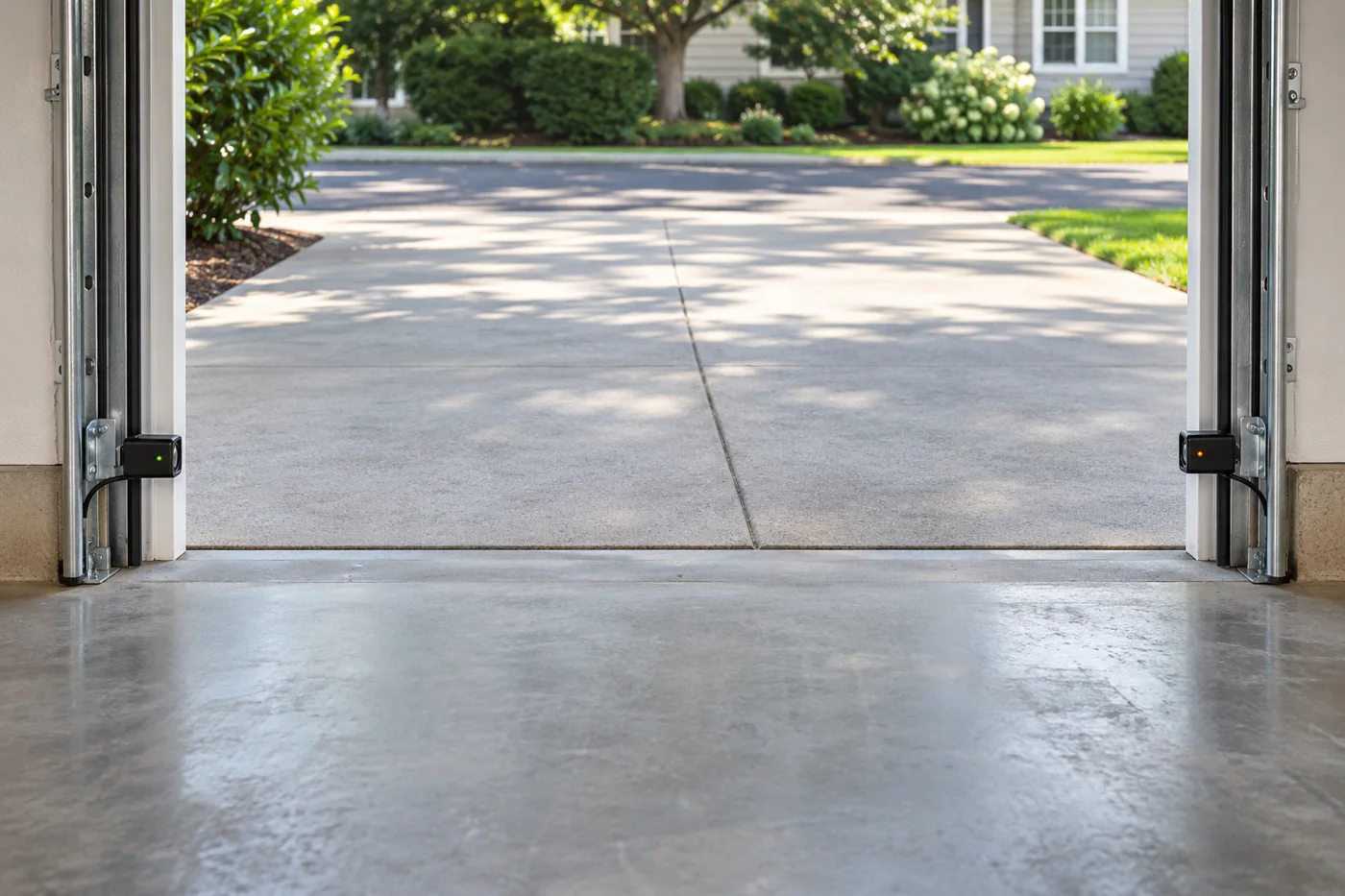
Need service? Explore the related service or call to discuss your garage.
Three symptoms that should not receive the same answer
When a Worcester garage door stops working, the first question is what actually stopped. A silent operator, a running motor and an uneven door describe different failures. That distinction belongs at the start of a repair conversation, before a component is selected. If the door is crooked or a lifting cable is loose, stop operation and keep the opening clear.
You do not need to make the diagnosis yourself. Give a short account of the last normal cycle and the first abnormal one. A change after a cold night is useful history, but cold weather alone does not establish the cause.
| What you notice | What to discuss |
|---|---|
| Only one remote fails | Controls and the exact operator model |
| Motor runs; door remains still | Door movement and lifting-system condition |
| Door leans or a cable hangs loose | Stop use and request an assessment |
What a useful repair scope explains
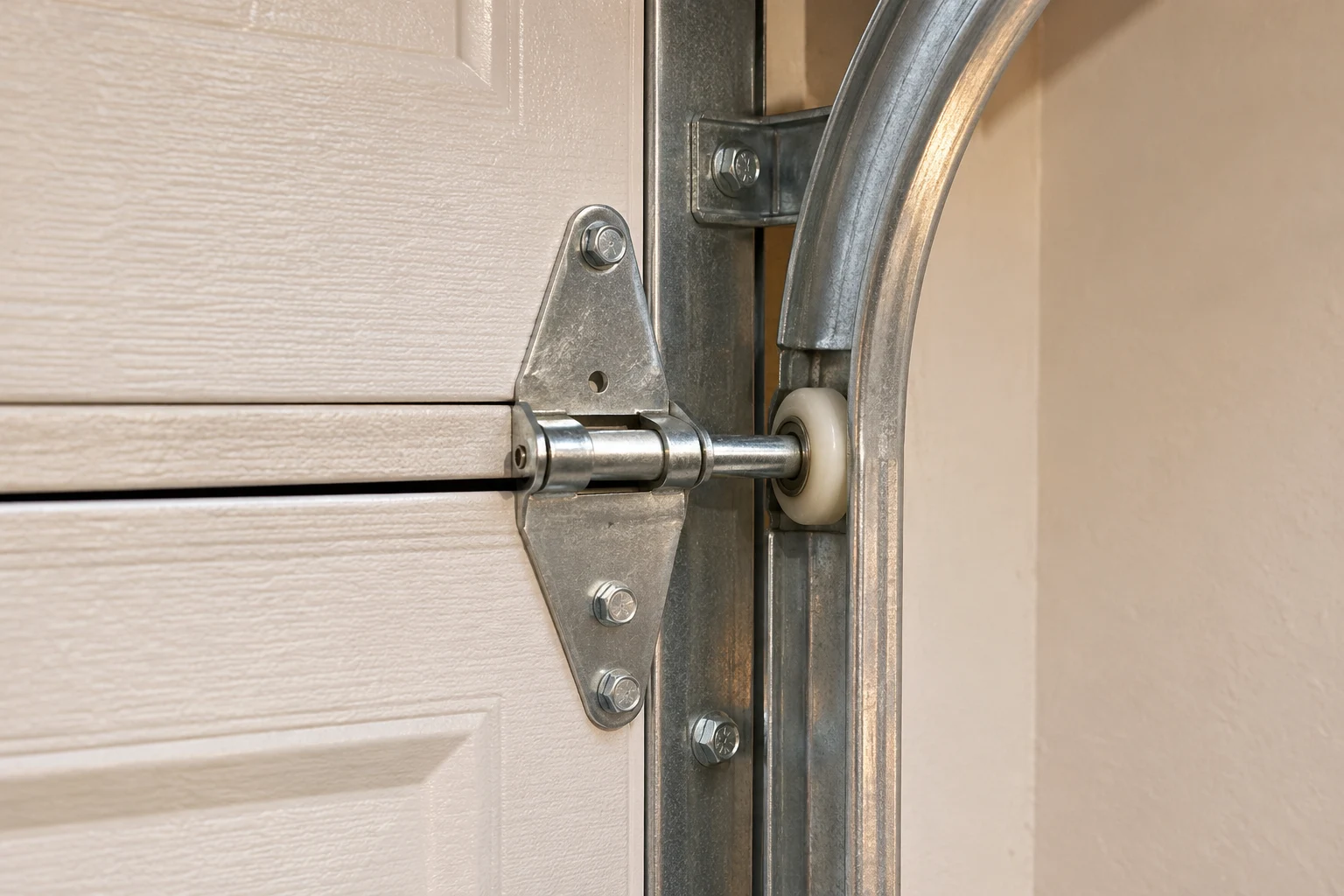
A repair proposal should connect the findings to the work. Ask which fault was identified, which compatible components are required and whether other wear is part of the same repair or a separate recommendation. A replacement remote and a broken spring should not disappear into one unexplained description.
Some older detached Worcester garages have restricted headroom or limited access beside the tracks. Describe the actual space rather than assuming the technician can approach from either side. The assembly must be assessed where it is installed; an online photograph of a part does not establish compatibility.
Compare the included work
Compare the proposed repair, final adjustment and operational checks together. Ask whether the operator is being reused and how the door’s movement will be checked afterward. If a panel is damaged, clarify whether an exact compatible section exists rather than matching appearance alone.
A wider scope may address more than the original complaint. That can be reasonable, but the reason should be explained. Keep optional changes distinct from the work needed to address the fault. The goal is a clear decision about the door you have, rather than a comparison between vague labels.
When a repair comparison needs another look
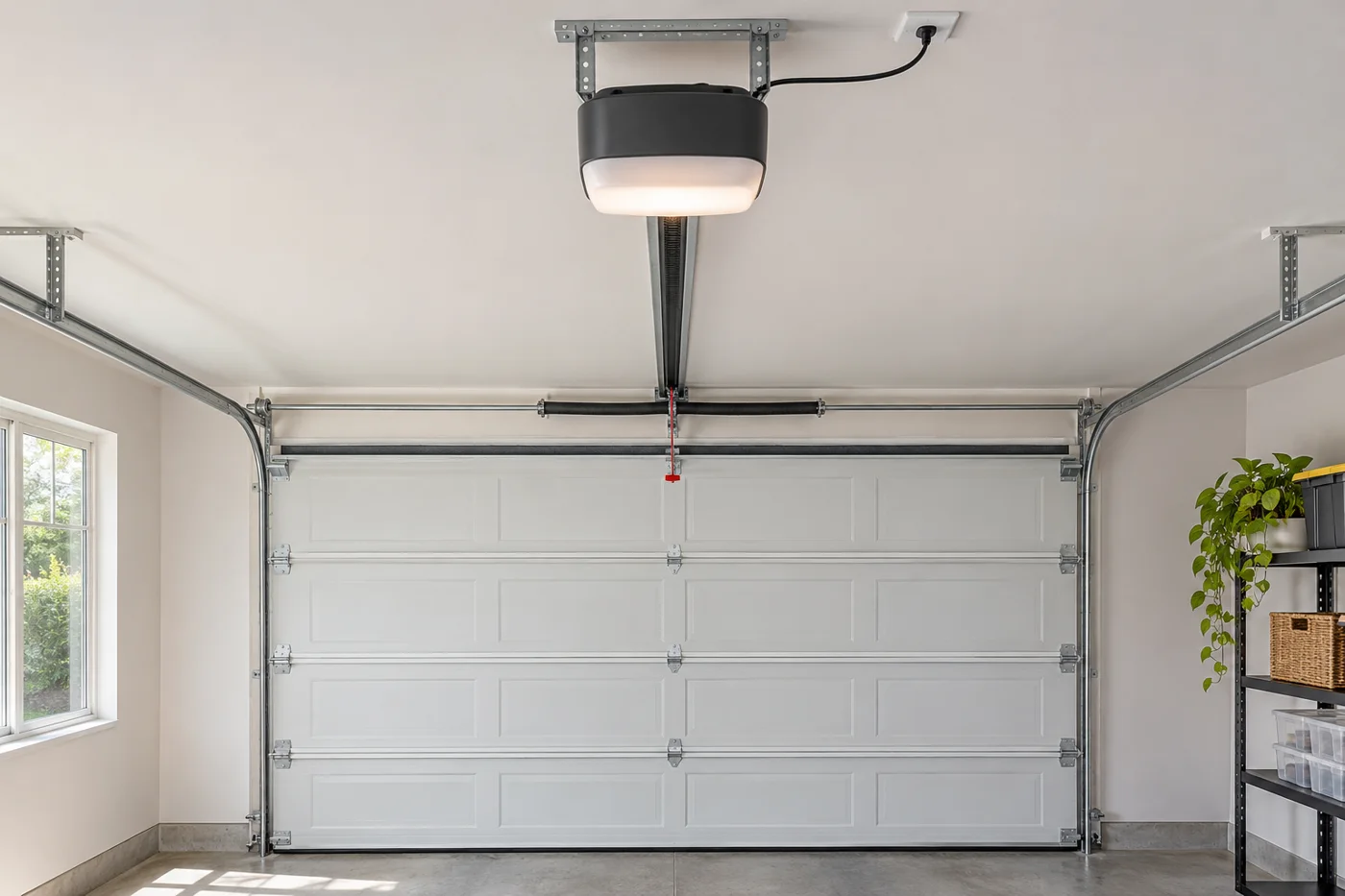
Be cautious about comparing an assessment of your actual door with an assumed repair described before anyone has inspected it. One scope may address a control fault; another may concern the door’s lifting assembly. Until the findings and included work are clear, the labels do not describe equivalent decisions. Ask whether the proposal relies on a confirmed condition or still needs verification at the property.
If the door has a history of the same symptom returning, say what was changed previously and how long the improvement lasted. That history can redirect the assessment. Keep the request factual: a repeated reversal or scrape is more useful than a conclusion that a particular brand or component is always at fault.
Have these details ready for the call
Tell us where the door is stopped, whether a vehicle is inside and whether the garage has another entrance. Mention an impact, recent power problem or previous operator change. Read a model label only if it is safely accessible from the floor.
Call 24/7 to start the repair request. The conversation confirms service suitability and appointment timing; the assessment establishes the actual work. For a suddenly heavy door, explore spring assessment first. If only the controls changed, opener diagnosis is a separate useful starting point.
- Current position: open, closed or partway
- The first symptom and when it began
- Any trapped vehicle or restricted access
Further reading
Follow the instructions for your exact door and operator. This guide supports recognition and planning; work on loaded lifting hardware belongs with a trained door-systems technician.
DASMA: Garage door system safety ↗U.S. CPSC: Automatic garage door opener safety ↗